
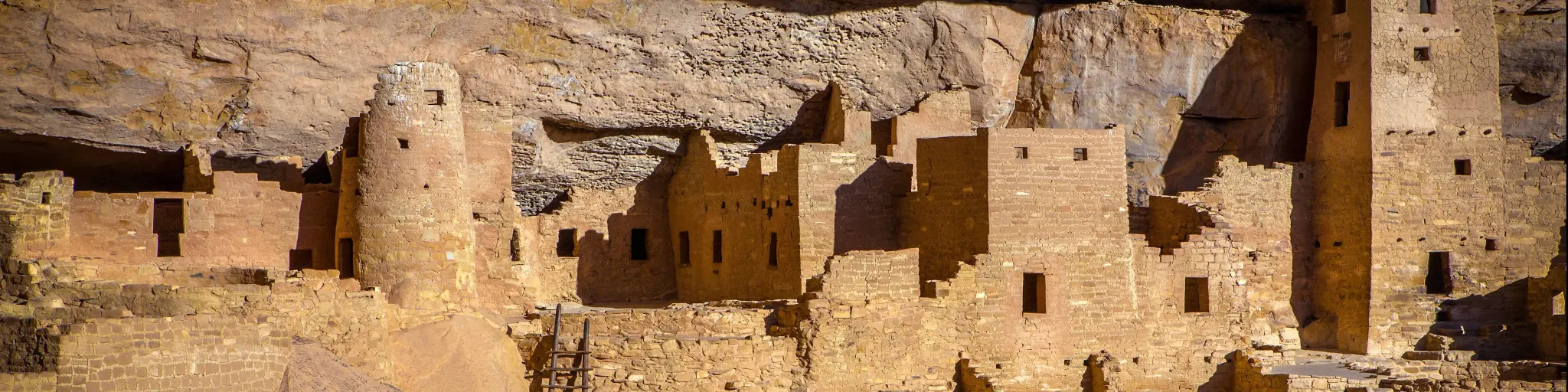
Road Trip from Denver to Mesa Verde National Park

Mesa Verde is the best place in the country to see how the Ancestral Puebloans lived - hundreds of stone villages built right into the cliff faces, abandoned around 1300 AD and left almost untouched for 700 years.
It's about 7 hours southwest of Denver, but climbing up a ladder into an 800-year-old village built into a cliff is unlike anything else in Colorado, and worth the drive.
One thing to note before you plan anything: the guided cliff dwelling tours (the main reason to come) run roughly May to mid-October.
Outside that season you can still drive into the park and see the dwellings from the overlooks, but you can't go inside them.
🚙 EXPLORE MORE: The Best Road Trips From Denver
Read this before you leave Denver
🎟️ Book your tours when they release
The ranger-guided tours into Cliff Palace and Balcony House are the most popular, and you can't just turn up. Tickets are sold through recreation.gov and released 14 days before the tour at 8:00 AM Mountain Time. Summer dates can sell out in minutes - set your alarm and book the day your window opens.
🛣️ The park is bigger than you might think
The cliff dwellings are 21 miles in from the entrance on a slow, winding mesa road. It will take you about 45 minutes from the gate before you reach anything, and the one-way roads inside the park mean you need to allow plenty of time between tours.
🪜 You'll need to climb
The tours involve real climbing - Balcony House has a 32-foot ladder and a crawl through a tunnel to get in. Cliff Palace has multiple ladders to get back out. None of it requires you to be an athlete, but if ladders, heights, or tight spaces aren't for you, it's a long way to come to only see the dwellings from a distance.
How many days do you need?
If you're only wanting to see the park, 4 days is perfect for the Denver to Mesa Verde road trip.
You'll need a day to drive each way - so you'll have two days in between, which is enough time to do the guided tours, hike to the petroglyphs, and see the quieter half of the park.
3 days would be a real push - the tours end relatively early in the afternoon, so you can't catch one on day 1 even if you set off very early from Denver.
You don't want to spend 2 days driving for just 1 day in the park. I've put down some great stops along the way and trip extensions below if you have more time.
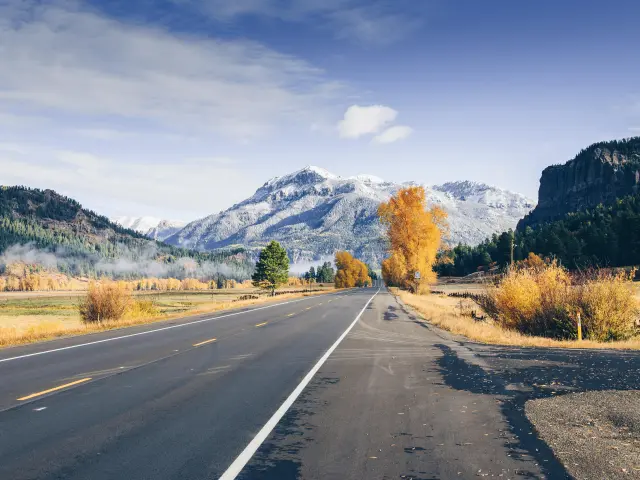
Day 1: Drive to Mesa Verde
🚗 390 miles ⏱️ 7 hours
Leave Denver in the morning and drive south down US-285 through the San Luis Valley, then west on US-160 over Wolf Creek Pass and past Durango to Mesa Verde. Stay over in the park, so you're ready to explore the dwellings before the day-trippers arrive.
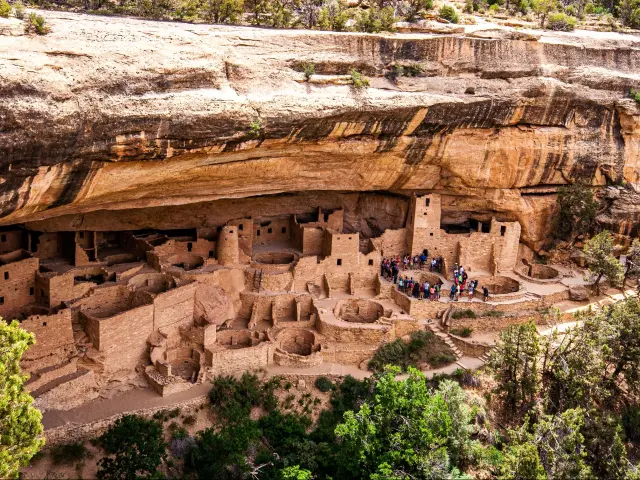
Day 2: Cliff Palace & Chapin Mesa
Spend the day on Chapin Mesa, the heart of the park. Do your booked tours of Cliff Palace and Balcony House, drive the Mesa Top Loop to see the pit houses and overlooks, and walk the Petroglyph Point trail to the largest petroglyph panel in the park.
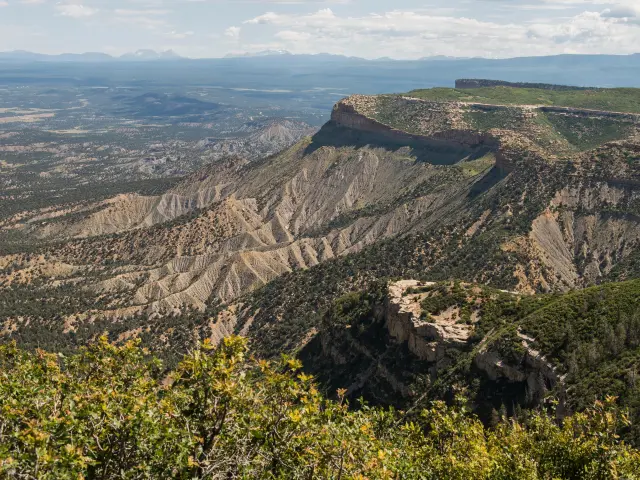
Day 3: Wetherill Mesa
Head over to Wetherill Mesa, the quieter side of the park many visitors will skip. Do a tour of Long House, the second-largest dwelling in Mesa Verde, and walk the trails out to the Badger House Community and the overlooks with a lot fewer people than you'll see at the main sites.
Day 4: Drive Home
🚗 390 miles ⏱️ 7 hours
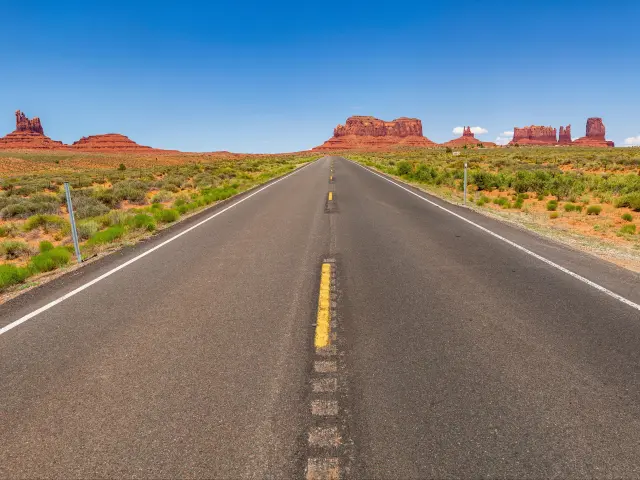
Drive back to Denver - you can go the way you came or a completely different route through Utah's canyons (takes an hour longer - more details below). Either route gets you home comfortably in a day.
Where to stay
The tours in Mesa Verde finish by mid-afternoon and there's nothing to do in the park afterwards - there are no restaurants other than the lodge, nowhere to go for a drink, and nothing to walk to.
So I'd stay in Durango even though it's about 1 hour 20 minutes from the dwellings.
The best place to stay in Durango is the Strater Hotel, right in the heart of downtown. After a full day out at the park, you can leave the car and walk straight out to dinner and a drink in town rather than needing to drive.
There is plenty of parking by the hotel, so coming and going each day is easy.
The hotel is an 1887 Victorian landmark - the most recognizable building in town. So you're staying somewhere with a bit of character rather than a highway chain.
A lot of people going to Mesa Verde choose to stay in Cortez instead. Booking sites will tell you it's just 5 miles from Mesa Verde, which sounds perfect on paper - but that 5 miles is to the park entrance, not the dwellings, which are another 45 minutes up the mesa road.
So in reality Cortez is 55 minutes from all the main sites versus 1 hour 20 from Durango. You save 25 minutes, but you lose Durango's spectacular mountain backdrop, pretty downtown, and better food options in exchange.
If you'd rather not drive in at all, the only hotel inside the park is Far View Lodge, up on the mesa about 15 minutes from the dwellings.
Just remember that you're paying for the location - the rooms are dated and somewhat basic. Food reviews are distinctly average and there's not much to do outside the hotel in the evenings. Far View Lodge only opens from spring to mid-October when the tours are operating.
Which route should you take?
There are two ways to drive from Denver to Mesa Verde, and they're very different trips - the direct route through the mountains, and the alternative through the Utah desert.
| Route | Distance | Driving Time |
|---|---|---|
| Wolf Creek Route US-285 & US-160 through the mountains | 390 miles | 7 hours |
| Moab Route I-70 & US-191 through Utah's canyons | 450 miles | 8 hours |
Take the Wolf Creek route to Mesa Verde and the Moab route back to Denver - you get two completely different drives and don't double back on yourself.
The Wolf Creek route is the faster, more direct way. You head south down US-285 through the San Luis Valley, then west on US-160 over Wolf Creek Pass and past Durango - all mountains, high passes, and wide valleys. If you only want to drive one road and back, take this one both ways.
If you want to break up the Wolf Creek drive, the Great Sand Dunes sit just off it in the San Luis Valley - worth a stop on the way if you set off early.
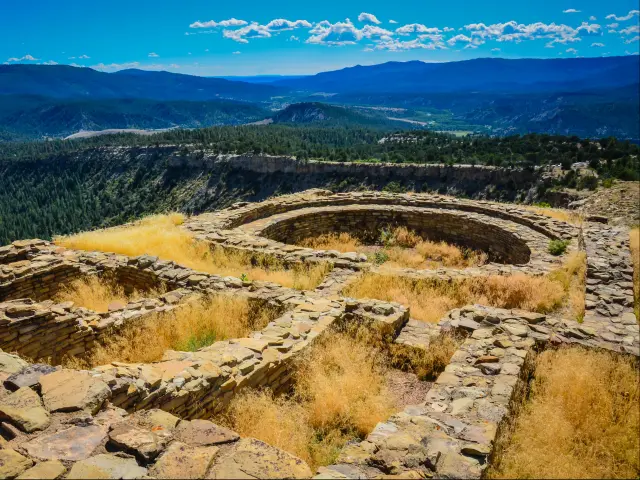
If you take the Wolf Creek route both ways, Chimney Rock National Monument sits just off US-160 near Pagosa Springs - it's a smaller Ancestral Puebloan site up on a dramatic pair of rock spires, and a natural stop on the drive home if you want to see even more dwellings.
Visits are guided and seasonal, so check times before you plan around it.
The alternative is the Moab route, which heads west out of Denver on I-70 first, then drops south through Utah's red rock on US-191 before cutting back east to Mesa Verde. It's about an hour longer, but you get to see the Utah canyon country and you drive right past Moab - the gateway to Arches and Canyonlands.
If you want the scenic version without stopping in Moab, Route 141 through Unaweep Canyon between Grand Junction and Dove Creek takes about the same time but trades the main highway for one of the prettiest, emptiest roads in the state.
If you want to customize your route, add a stop in Moab, or take more time to add Monument Valley, you can make your own trip plan in the Planner.
What to do in Mesa Verde
The park splits into two halves, and that's why you really want to have two full days exploring the park. Chapin Mesa is the more famous side - the biggest sites are here including Cliff Palace and Balcony House. Most of the crowds will be on this half of the park and the tours will be busier.
Wetherill Mesa is the quieter half across the park with only one major dwelling, but quiet trails and no crowds.
You can spend a day on each and you'll see everything worth seeing without rushing.
The guided cliff dwelling tours
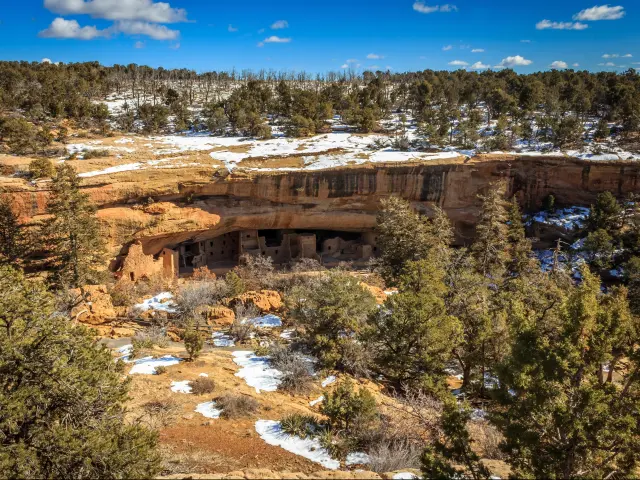
The tours are the main reason to come. You can see the dwellings from the overlooks, but the tours are the only way to actually walk into them - down into the alcoves, through the rooms, standing where people lived 800 years ago.
Cliff Palace is the one everyone comes for - the largest cliff dwelling in North America, with over 150 rooms tucked under a vast stone overhang providing a natural roof.
The tour takes you right down into it, and you'll only realize the scale when you're standing inside. If you only do one tour, do this one.
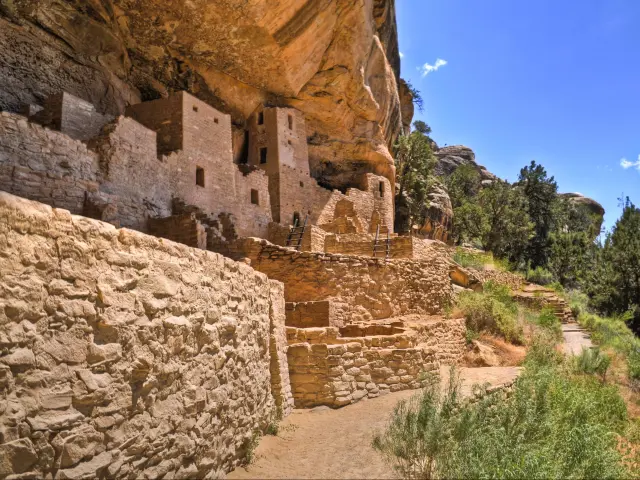
Balcony House is the (slightly) more adventurous option - it's smaller, but you climb a 32-foot ladder and crawl through a tunnel to get in and out. You don't need to be super fit, but you will need to get down on all fours.
Cliff Palace and Balcony House are close together on the same road loop on Chapin Mesa and both run multiple tours in the mornings and over lunchtime, so you can easily do both in one day.
Tickets sell out fast and have to be booked ahead - they release at 8:00 AM Mountain Time, 14 days before the tour date. The official NPS booking link is at the top of this guide.
Mesa Top Loop and the museum
Mesa Top Loop is a separate loop from the one Cliff Palace and Balcony House sit on, about 15-20 minutes away.
It's a 6-mile one-way drive with a dozen stops you do entirely on your own - no tickets, guides, or bookings required.
The Ancestral Puebloans lived up here for over 600 years - first in pit houses dug into the mesa, then in stone villages on top, and only moving into the cliffs for the last hundred years or so before leaving the area.
Sun Point View is the spot where you can see Cliff Palace and a dozen other dwellings set into the canyon walls across from you - the best viewpoint in the park. Look the other way too, toward Navajo Canyon - it's quieter and just as good.
Sun Temple, a little further on, is a large stone structure on the mesa top. The main story is that this was an ancient astronomy observatory or a religious building, but nobody knows, so feel free to come up with your own theory. (My completely unfounded hypothesis is that it was a bar.)
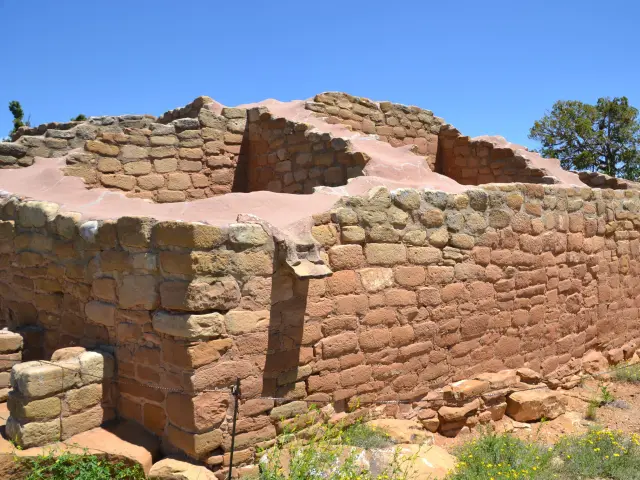
This is also the part of the park you can spend more time in if the tour climbs aren't for you - the overlooks get you good views of the dwellings without a single ladder.
The Chapin Mesa Archeological Museum is at the main facilities site where the two loops split - you'll stop here for food and restroom breaks, so make sure you get into the museum too.
It's small, but there's a lot of interesting information in the main museum (it's over 100 years old) as well as helpful tips from the staff on what's happening in the rest of the park.
Petroglyph Point and the hikes
Mesa Verde has a couple of proper hikes, and they're a big part of what turns it from a one-day stop into a two-day trip. After a morning of guided tours where you're moving with a group, it's good to get out on your own two feet.
Petroglyph Point Trail is the best of them. It's a 2.4-mile loop that works its way along the canyon wall - narrow, rocky, squeezing between boulders in places - out to the largest petroglyph panel in the park, then climbs back up onto the mesa top for the walk home.
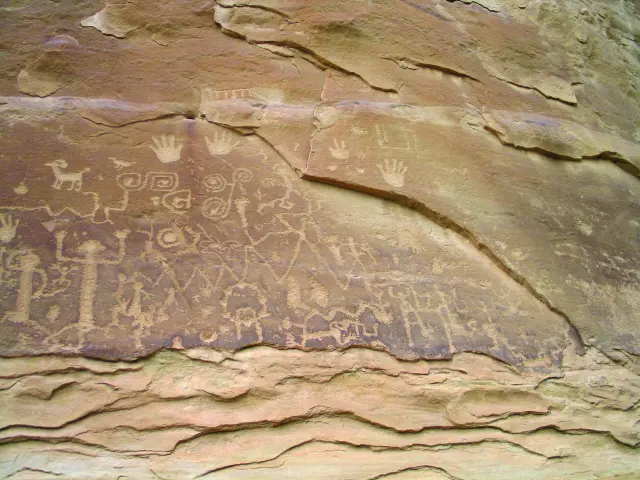
It's the only spot in Mesa Verde where you can stand right in front of the rock art, and the trail itself is half the reason to go. You sign in at the trailhead before you set off.
Spruce Canyon Trail starts from the same area but drops down into the canyon bottom instead, giving you the reverse view - looking up at the mesas rather than out across them. It's the quieter of the two and a good leg-stretch if you've got the energy for the climb back out.
Both trails are out in the open with very little shade, so take more water than you think you need and go in the morning rather than the heat of the afternoon.
Wetherill Mesa - the quiet half
Wetherill Mesa is the side of the park most day-trippers never make it to, and it's all the better for it. It's a slow, winding 12-mile drive from the main road to reach it, and that little bit of effort is exactly why it stays quiet - spend a day here and it feels a world away from the queues at Cliff Palace.
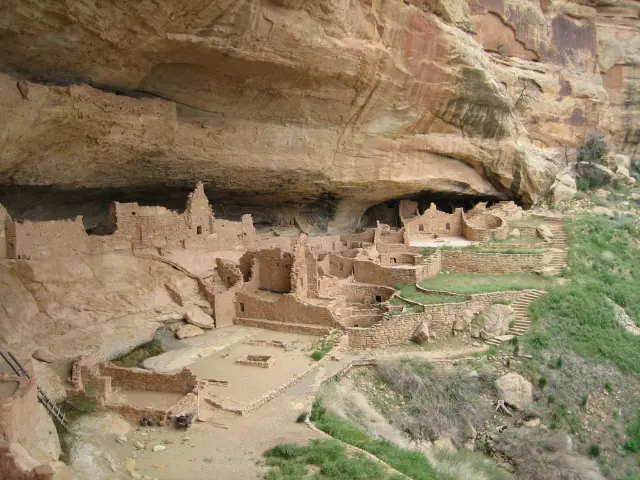
The main thing here is Long House, the second-largest dwelling in the park. The guided tour is longer and more involved than Cliff Palace - more walking, more ladders - but the payoff is seeing a site every bit as impressive with a handful of people instead of a packed group.
It's the quiet, deep-cut version of the Cliff Palace experience, and for a lot of people it ends up being the better one.
Around it, the Badger House Community is an easy self-guided walk along a paved and boardwalk trail through mesa-top sites, and there are overlooks out to dwellings you can only see from a distance. It's a gentler day than Chapin Mesa, which is no bad thing after all the ladders.
One thing to note: Wetherill Mesa keeps shorter hours and a shorter season than the rest of the park, and it's the first part to close for the year. Check it's open for your dates before you build a day around it - there's nothing worse than driving all that way to find the gate shut.
Two days is plenty to see all of the key sites in the park. If you have more time, there are a few great ways to extend the trip - I've covered them below.
If you can add a day
If you do choose to stay in Durango, the easiest way to upgrade this trip is to actually spend a full day in the town before heading back to Denver.
The best known thing to do is the Durango & Silverton Narrow Gauge Railroad - it's a vintage steam train that spends the whole day winding through the San Juan Mountains to Silverton and back.
The views of the mountains and tree-lined valleys are amazing and you get time to really relax on the way, but it's a full-day commitment.
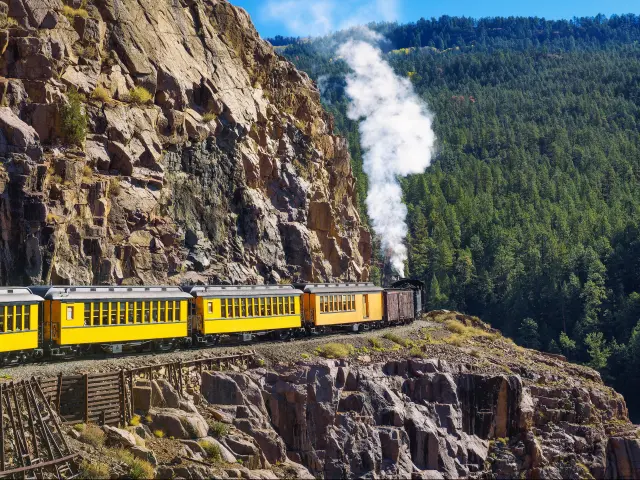
Two steam trains leave Durango in the morning and it's 3.5 hours to Silverton. Then you get to spend 2 hours in Silverton before making the same 3.5 hour trip back, arriving around 6-7 PM.
Availability isn't bad, but during the summer don't leave booking until the last minute as they can sometimes sell out.
If a whole day on a train isn't your thing, a slow day in Durango works just as well - it's a proper Old West town with a lot more to it than just the evening restaurant scene.
I've covered the town, the train, and everything around it in the full road trip from Denver to Durango article.
Mesa Verde sits right in the Four Corners region, so it pairs well with the other big southwest trips - Monument Valley is only about 3 hours further on if you want to keep going.
If you want more ideas, my Denver road trip guide has plenty - including big trips like Yellowstone, Las Vegas, and the Grand Canyon.
Sasha Yanshin – Founder & Lead Driver
Sasha Yanshin has spent the last 15+ years mapping and driving thousands of miles across Europe and the US. As the Founder and Lead Driver of Lazytrips, he brings an analytical approach to road-tripping, sharing meticulously tested routes, realistic drive times, and the hard-earned logistical reality of the open road.
Read full bio